
Just a little off the top! A first haircut in small steps
The cape itches, the comb catches and there's a bit of hair on the floor. Here's how a first haircut can feel from the chair.
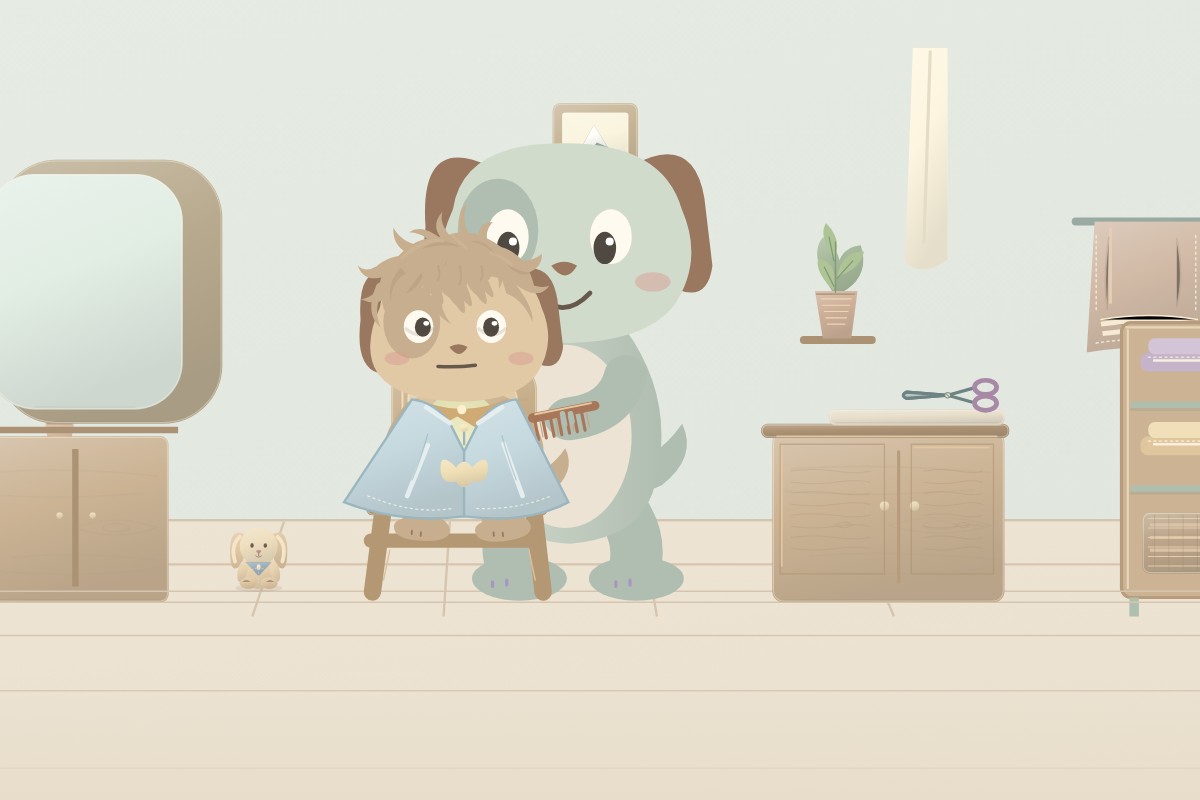
Picture your child blowing their fringe out of their eyes three times over breakfast. By the end of the toast, you've found the comb and put a mirror in front of the chair. They climb up quite happily. Then they see the cape.
“What's that for?”
Before you've finished answering, they're scratching their neck. You haven't cut a single hair, but your child is sure there are at least three hedgehogs under that cape. You take it off, and everything in the mirror looks fine again. Then the comb gets stuck. The fringe goes straight back to where it was, and the hedgehogs are still apparently waiting for an explanation.
In the story, Mom shows her child the tools and they take a break when the child feels unsure. With a real haircut, it helps to work out which of all the new sensations is causing the trouble. The children's occupational therapy guides behind these ideas are linked at the end.
Try the bit that feels possible today
Play hairdresser on a day when nobody actually needs a haircut. Put a towel round a toy's shoulders and give it a comb. Use your fingers to act out the snip, with the real scissors safely put away. “First I'll comb it, then comes one little snip, then we brush the hair away.” An older child might like to visit the hairdresser's chair first or ask what they'll be using. Seeing an older sibling get a trim can also make the sequence more familiar, if your child wants to watch. If the first attempt is just a little combing, end while that still feels manageable. You can come back to the chair later or another day. Before the next visit, tell the hairdresser what worked. A small detail like brushing away loose hair after each snip may be easier to plan for in advance.
Notice when they pull away. Some children dislike hair tickling the back of their neck, some dislike the spray, and some find clippers noisy. A soft towel may feel better than a scratchy cape. If the clippers are the problem, talk through other options with the hairdresser in advance. If combing pulls, slow down and find the bit that's caught.
Agree on a stop signal
“If you lift your hand, I'll put the comb down.” Try it before the haircut and stop when they signal. Let the hairdresser in on the plan. Tell your child what's about to happen in a few words. “I'm going to comb beside your ear” may be plenty of information for a two-year-old. A bigger child might like to see that spot in the mirror first.
Use sharp tools only while your child can sit still safely. If they turn, jump up or cry, put the tools down somewhere safe and take a break. A short rehearsal might be enough for today. If several kinds of personal care are regularly very distressing, ask your child's health professional what individual support is available.
Make the ending familiar too
Brush away the loose hair with a soft cloth and look in the mirror together. Ask which part felt fine and which felt strange. Even a very short answer can give you something to remember next time. You can finish with the same quick ritual each visit, whether you trimmed the whole fringe or just managed to get comfortable in the chair. Paying attention when your child signals is a good thing to take away from the experience.
What to take with you
Sources, if you'd like to read more
These studies and professional resources informed this article.
- Humber Teaching NHS Foundation Trust – Hair care, washing, cutting and brushing
- University Hospitals Dorset – Haircuts, children's therapy guidance
- West Suffolk NHS – Hair Care
The linked sources are in English.
Know someone who could use this?
Pass it on to a fellow parent. A little support can make a difference.