
Rabbit's still awake. How do you bring the evening to an end?
Pyjamas are on and the story's finished, but the toy rabbit urgently needs a drink. What can give bedtime a familiar ending?
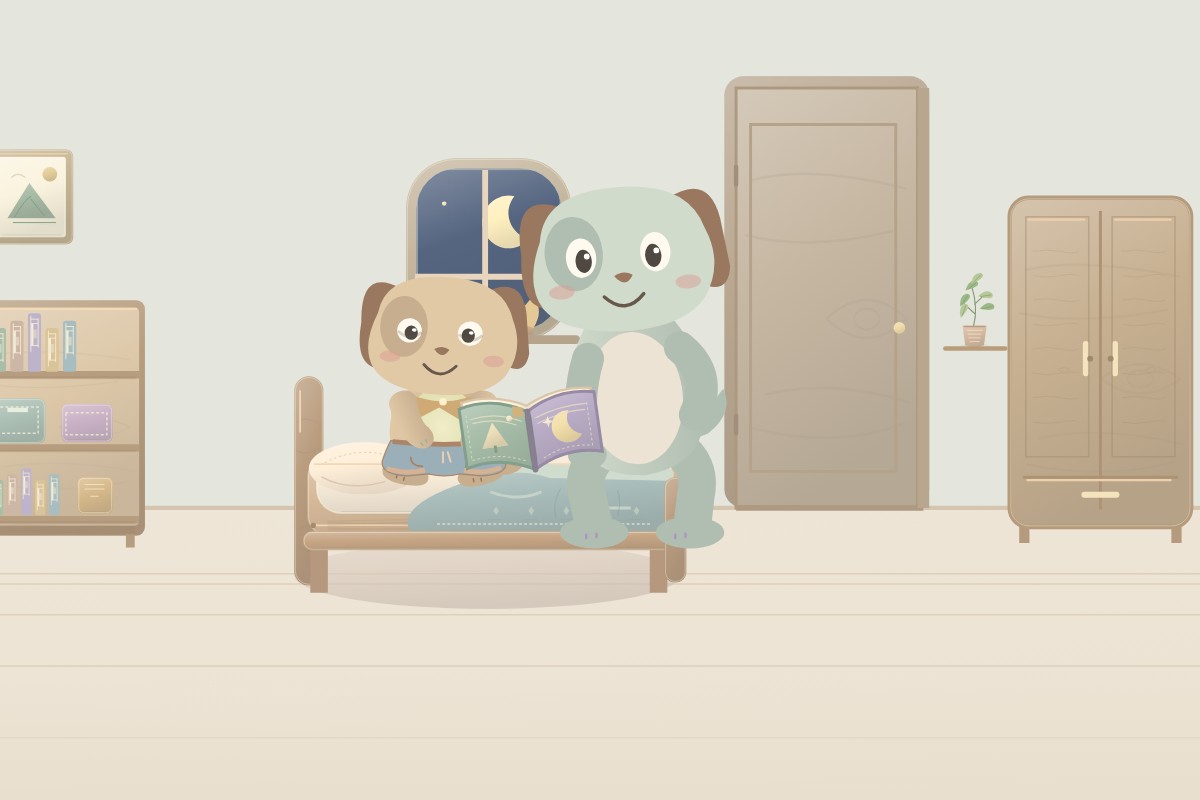
Picture closing the book, straightening the blanket and reaching for the lamp. Your child sits up. “Rabbit's thirsty.”
Rabbit gets an imaginary sip. Your child asks for a real one. By the time you get back with the cup, Rabbit is sitting at the other end of the bed because apparently he can see the moon better from there. You'd be quite happy if the moon could turn off the lamp for you. You've got your hand on the switch again when someone remembers that Rabbit might also need his own blanket.
In the bedtime story the moon comes out, then it's time to get ready, brush teeth, share a story and get under the covers. Familiar steps can show a child that the day is ending. The study and guidance I've used are linked at the end.
Choose three familiar steps
“Brush teeth, one book, then good night.” That can be enough. If you usually have a bath first, it has a place too. Get the book and water ready ahead of time. A younger child can choose between two books. An older child might tell you what comes next. After they've chosen, use the same short goodbye. There can be a few minutes to talk about the day if that helps you settle together. Try the new sequence on an evening when you have a little room to spare. Tell your child the order before you start, perhaps while you're putting away the toys. You can let them place the book by the bed and choose where the water goes. When you're both tired, you'll already have the few things you need in reach.
In a controlled study of young children, parents reported easier settling and fewer night wakings after starting a regular bedtime routine. The test in your house is whether the routine feels manageable enough to repeat. After an illness, a trip or a very long day, your three steps might sometimes become two. You can still say the familiar last line. Make the last step something the person doing bedtime can repeat.
Look at when you actually get to bed
Sleep needs change with age. The World Health Organization recommends 11–14 hours of good-quality sleep in 24 hours for children aged one and two, and 10–13 hours for those aged three and four. These totals include daytime sleep. Fairly regular times for sleep and waking give you a frame that the rest of the family's day can fit around. If someone else is doing bedtime, tell them which little ending your child knows. The book can change and the good-night words can stay familiar. A tired child may be happy to hear the same line even if it comes in somebody else's voice.
If your child lies awake for a long time most nights, make a note of when and how long they napped, when you started getting ready and when they fell asleep. One evening tells you very little. Talk to your child's health professional about persistent sleep difficulties, frequent loud snoring or pauses in their breathing. Your notes can help you explain what you've seen at home.
Be ready for one more request
“The water's here, Rabbit's next to you, and the story is finished for tonight.” You can say it while your child is disappointed. Stay beside them for a moment, hold their hand and keep the ending you agreed. If you share a story on a screen, you can do that earlier and spend the quieter last minutes with a paper book or a story you tell. Familiar words and a comfortable place to sit are enough.
What to take with you
Sources, if you'd like to read more
These studies and professional resources informed this article.
- Mindell és munkatársai – A nightly bedtime routine and sleep in young children
- WHO – Physical activity, sedentary behaviour and sleep for children under 5
- American Academy of Pediatrics – Brush, Book, Bed
- American Academy of Pediatrics – Sleep Apnea in Children
The linked sources are in English.
Know someone who could use this?
Pass it on to a fellow parent. A little support can make a difference.