
I'll do it! Toothbrushing in two acts
Your child already has the brush. You'd quite like the back teeth to get a turn too. Here's how you might fit both in.
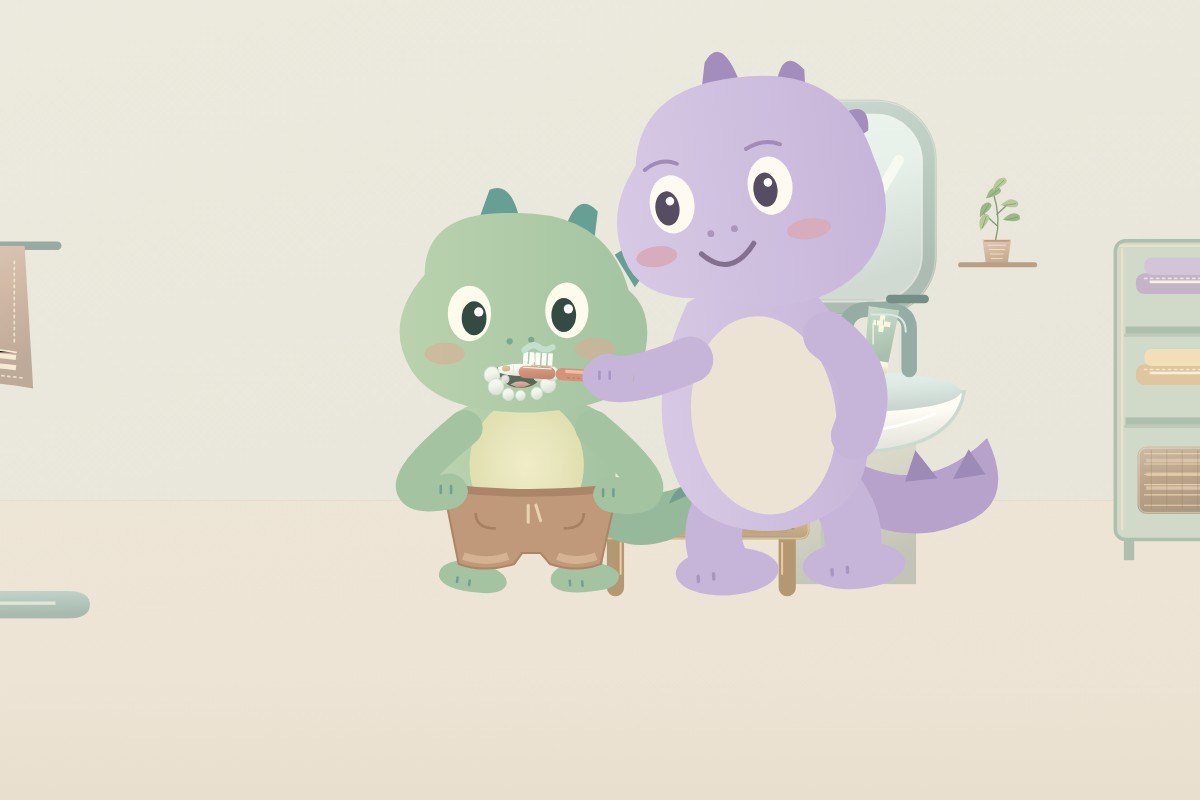
Picture the two of you by the sink in pyjamas. Your child takes the toothbrush, looks in the mirror and puts on the serious expression of someone who has just been given the keys to a dental practice. They run the brush over the front teeth. Then they do it again. “Done!”
“What about the back?”
Their mouth shuts and the brush stays in their hand. In the mirror you can see how proud they are to have done it themselves. You're thinking that their back teeth had some dinner too. Getting there with the brush now seems like something that might need a formal appointment.
In the story, the child tries the toothbrush and then Mom helps. Two jobs in the same toothbrushing routine. The dental recommendations behind the practical tips are linked at the end.
Give out the two parts before you start
“You brush first, then I'll go round the back as well.” Say it before you hand over the brush. For a two-year-old, the first act may last two strokes. An older child can show you the inside surfaces and the tops they chew with. A grown-up can finish by checking and brushing the spots that are still hard for small hands to reach. Keep the order the same so they know when it's their turn again. If handing the brush over is the hard part, offer a clear cue for the change. “When you've finished the front, rest the handle in my hand.” Some children like seeing whose turn it is in the mirror. Keep the cue the same for a few evenings and see whether they begin to expect it.
A small, soft brush head makes it easier to reach the back teeth. Find a position where you can see into their mouth and their head is comfortably supported. Follow an order so that each surface gets brushed. Brush twice a day with fluoride toothpaste from the time the first baby tooth appears. Put the evening brush after the last food of the day. You can also let them put the brush back in its cup after your turn.
Put the toothpaste on the brush yourself
Dental guidance recommends a small amount of fluoride toothpaste for young children. The age for going from a rice-grain smear to a pea-sized amount varies by region. The European paediatric dental guideline gives a pea-sized amount from age two, and the American paediatric dental guideline starts that at age three. Use local guidance, and ask your child's dentist about the fluoride strength and amount if you're unsure.
Put the toothpaste on for them and help them spit out the excess once they can. The story has a rinsing scene. With fluoride toothpaste at home, spitting out the excess is enough. Leaving out the water rinse keeps the fluoride in contact with the teeth for longer. A little child who is still learning to spit needs the small amount their dental guidance calls for.
Find the difficult bit when they close their mouth
The taste might sting, the brush might feel too rough or the whole thing may feel long when they're tired. Try changing one thing. “Let's start where it felt comfortable yesterday.” They can hold the mirror or let you know when they need a pause. If brushing hurts or is consistently very difficult, talk it through with a children's dentist. Take note of which parts of the mouth or which sensations seem to bother them.
What to take with you
Sources, if you'd like to read more
These studies and professional resources informed this article.
- European Academy of Paediatric Dentistry – Guidelines on fluoride for caries prevention
- American Academy of Pediatric Dentistry – Policy on Use of Fluoride
- American Academy of Pediatrics – Fluoride for Children
The linked sources are in English.
Know someone who could use this?
Pass it on to a fellow parent. A little support can make a difference.