
The duck's already in. What helps when bath time feels unfamiliar?
Sometimes it's the sound of the tap, sometimes it's the shampoo. A familiar sequence and a grown-up within reach matter in the bath.
Picture a yellow duck floating in the bath. Your child is standing at the edge of the mat with one sock still on. They fish the duck out, check it over and put it back. “He can go in.”
“What about you?”
“When he's come out.”
Yesterday you had to coax your child out of the bath. Today they jumped when you turned on the tap, and the duck has been representing the whole family in the water ever since. You're thinking of bath time as one thing. Your child may still be thinking about the sudden noise. Meanwhile the duck keeps tipping over and looking surprisingly pleased about it.
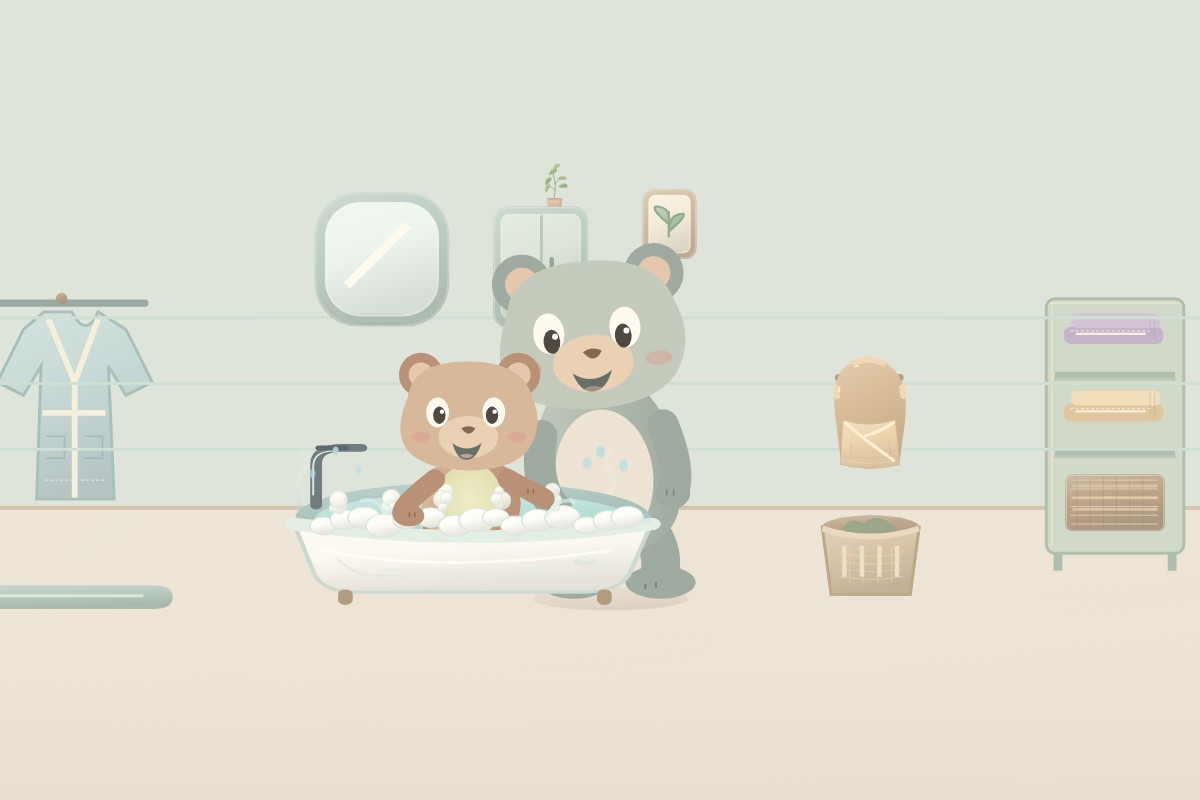
In the story, Dad is there from getting ready to wrapping his child in a towel. In the bathroom at home it can help to know what comes next and have a grown-up close all the way through. The water safety guidance is linked at the end.
Have what you need within reach
Put the soap, towel and pyjamas close by. Fill the bath, mix the water and check that it feels comfortably warm before your child gets in. If the sound of running water bothers them, bring them in once you've turned off the tap. If the drain is the worrying bit, you can wait to let the water out until they've got out and dried off. Try putting the same two or three steps into words each time. “Socks off, feet in, then we'll wash.” Your child might tell you that the water looks deep or point to the cup rather than answer your question. You can pause with them on the mat and see what's going on before either of you gets wet. A predictable beginning gives you room to make the rest shorter on a difficult evening.
An adult should stay within arm's reach, keep their attention on the child, and be ready to support a young child immediately. A bath seat or an older sibling still leaves the supervision to you. If the doorbell rings or the towel turns out to be in the other room, take your child out of the bath and bring them with you. The duck can look after itself for a moment. If you need to pause, keep your child beside you on the mat.
Find the bit that's holding them up
“Water ran onto your face when we washed your hair. Would you like a dry cloth here?” Your child can hold the cloth while you tell them before rinsing with a little water at a time. With a younger child, show them the cup and give them a short sentence. If the feeling of water is new, they can touch it with their hand beside you before getting in. Give them enough time to see what you've shown them.
A preschooler might choose what to wash first, or wash the duck's back while you help them. Keep the next step clear as you go. If a regular bath feels like too much today, a shorter wash may do. It's often easier to find time for hair washing when everyone has a little more energy than they do at the end of the day.
Give getting out its own cue
Getting out is another change. Some children feel cold before they reach the towel, and others would happily keep playing. Tell them what's coming and show them what happens afterwards. “The duck can swim across once more. I've got your towel right here.” A younger child can go straight into the towel. An older child might dry the duck's head while you help with pyjamas. Keep your attention on your child until they're safely out and dry.
What to take with you
Sources, if you'd like to read more
These studies and professional resources informed this article.
- NHS – Bathing your baby
- American Academy of Pediatrics – Infant drowning prevention and water safety
- American Academy of Pediatrics – Bathroom Safety
The linked sources are in English.
Know someone who could use this?
Pass it on to a fellow parent. A little support can make a difference.