
I can do it! Helping your child get dressed without taking over
One sock is on, the other is a puppet, and you need to leave. Small ways to help your child practise dressing while still getting out the door.
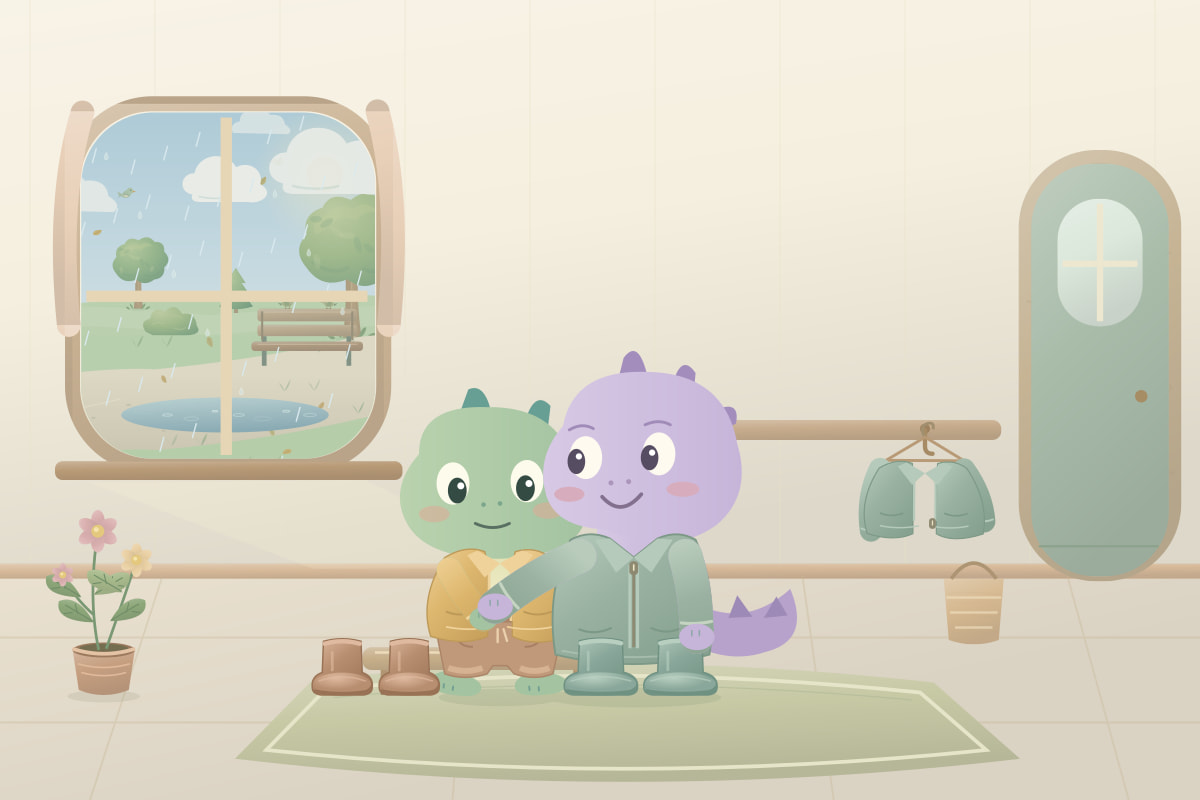
Picture a morning by the front door. The bag is packed, your keys are in your hand, and your child has one sock on. The other sock is speaking. Apparently it is a snake, and it would like breakfast. You crouch down with the trousers. “Shall I help?” “No! I can do it!” Fair enough. You wait while two feet try to share one trouser leg. Then comes a furious “Help me!” You reach for the waistband. “Not YOU!”
You want to leave. Your child wants to be the person who gets dressed, without quite having all the moves yet. Both wishes make sense; neither puts the second sock on. You take a breath, sit beside them and say, “I'll hold this opening. You put your foot through.” A foot appears. For a moment, the morning has a working plan. The snake is still waiting for breakfast.
Getting dressed involves balance, hand movements, working out which way clothes go and remembering the steps. Wanting to do it alone and needing help can happen at the same time. I've used professional guidance for this article; the sources are at the end.
1. Make the clothes easier to manage
Try comfortable trousers with an elastic waist and a top with roomy openings. Offer two suitable options: “Blue trousers or green ones?” Both need to work for the weather and the day's activities. A choice needn't mean opening the entire wardrobe.
Let your child sit somewhere stable, such as on the floor, to put feet into trousers or socks. “Sit beside me. Let's find where your foot goes.” Check comfort too: if something scratches or pinches, changing it may help more than another explanation.
2. Leave one small step for them
Instead of handing over the whole job, do the tricky beginning and let your child finish. Help the head and arms through a top, then say, “You pull it down over your tummy.” Once that feels manageable, they can try more of the task.
For a two-year-old, that last pull might be plenty to practise. A five-year-old might manage the top but still need help starting a zip. These are examples, not deadlines. Offer help with the step that's difficult today: “Shall I get it started, then you pull?”
3. Give one useful clue
“Get dressed” contains a lot of instructions. Try one at a time: “Find the big opening.” Wait before adding the next. A picture on the front of a top can help: “The bear goes on your tummy.” Lay clothes out in the order you'll use them.
Notice what actually happened: “You pulled your foot through!” If a sleeve gets twisted, help untwist it. There's no need to turn a difficult sleeve into a lesson about trying harder.
4. Separate practice from the rush
Choose a quieter moment to practise one item, perhaps before putting pyjamas on. “Would you like to try pulling this top off?” You don't need to rehearse a whole morning. Taking clothes off can be an easier starting point than putting them on.
When you really need to leave, you can say, “You wanted to do that part. Today I'll help so we can go. We can practise later.” Only promise a later try you can make room for. Helping on a rushed morning doesn't have to turn every future morning into an adult-only job.
A little help still leaves room to learn
Sources, if you'd like to read more
These studies and professional resources informed this article.
- Supporting your child's dressing skills — Bedfordshire and Luton Children's Health (NHS)
- Learning to get dressed — Cwm Taf Morgannwg University Health Board
- What children wear to early childhood education and care — ACECQA StartingBlocks
- Dressing Skills — Warrington and Halton NHS occupational therapy
The linked sources are in English.
Know someone who could use this?
Pass it on to a fellow parent. A little support can make a difference.