
Stop, that hurt! What to do when a game turns into pushing
The ball has rolled away, two children are crying and everyone is pointing at someone else. What comes after stopping the push?
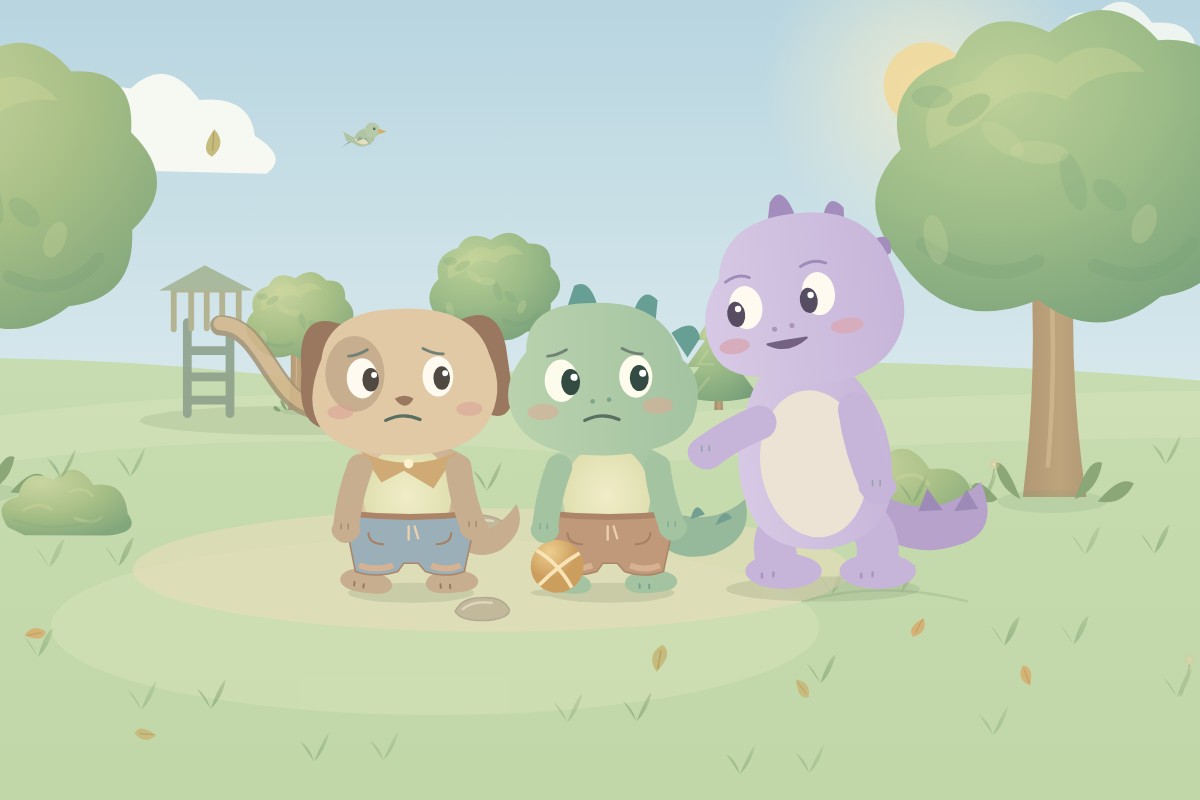
Picture the bouncing suddenly stopping at the playground. By the time you look up, your child is holding their shoulder and the other child is bending down for the ball. Two sentences reach you at once.
“They pushed me!” “I only asked!”
The ball rolls into your bag. It's managed to get out of the argument faster than anyone else. You're still thinking about who to talk to first when both children go for it at once. From where you're standing, the ball can stay by the bag for a bit. You'd like to get through the next thirty seconds without another child rubbing a sore shoulder.
In Roll the Ball!, Milo says it hurt and asks for help. Mom stops the pushing and gives him a moment. Rolling the ball together comes later, when he's ready. The child development and paediatric guidance used for this article is linked at the end.
Stop the push first
Go over, stay close and keep the children from hurting each other again. “I'm going to stop you. Pushing hurts.” Check the child who was pushed. If they're injured, look after them first. A few plain words are enough in the first half-minute. The ball can stay where it is until both children are safe. When you're watching from close by, you may see the same scramble beginning next time. You can step in while there's still room to talk. “You both reached for it. Let's put the ball here while I hear what you want.” With practice, the words become more familiar on both sides of the game.
“You wanted to play too. You can ask, and I'll help if it's hard.” You can hear what the other child wanted and hold the boundary at the same time. A small child may reach for the toy before the words come to mind. The grown-up can stop the pushing and show them another way once they have calmed down.
Give them two simple things to say
The child who was pushed can say “Stop, that hurt!” and go to a grown-up. Practise on a quiet day too. The child who wants the ball can ask “Can I roll it too?” If that's a lot for a two-year-old, “Me too?” may be enough with an adult to help with the answer. An older child can come up with their own words to ask or offer help.
If the child who pushed wants to put things right, they might bring the ball back, fetch a tissue or ask if the other child is all right. Let the child who was hurt decide whether they're ready for company. Taking a break can be a perfectly good ending. They can try a game together another time.
Play again when both children want to
When things have settled, offer to let one child roll and the other roll it back. Sit close and wait a moment between rolls. The back-and-forth makes it easy to see whose turn is coming. You can play the same way with a soft ball at home the next day, without having to start from an argument. Let your child see you wait for their signal before you send it back.
If either child still wants space, put the ball away or find separate things to do. If pushing or hitting often causes injury and simple limits still leave you struggling to keep everyone safe, talk through the situations with your child's health professional and an educator who knows them. You can describe what usually happens just before someone gets hurt.
What to take with you
Sources, if you'd like to read more
These studies and professional resources informed this article.
- American Academy of Pediatrics – 10 Tips to Prevent Aggressive Behavior in Young Children
- American Academy of Pediatrics – The Power of Play
- Harvard Center on the Developing Child – Serve and Return
The linked sources are in English.
Know someone who could use this?
Pass it on to a fellow parent. A little support can make a difference.