
The rainbow's gone. Did both thumbs get washed too?
The water's running and your child's hands are already halfway to the towel. How do you fit in the soap and twenty seconds?
Picture a finished rainbow. There are six colours on the paper and seven on your child's palm. They proudly show you the extra blue and set off for the sink. You're just straightening the step when they come back with two dripping hands. “I washed them!”
“With soap?”
They look back at the sink as though the soap has just arrived. Up they climb again, press the pump and get one palm covered in bubbles. Their other hand is already reaching for the towel. There is now enough blue on the towel to make a small second rainbow. You haven't even started looking at the backs of their hands.
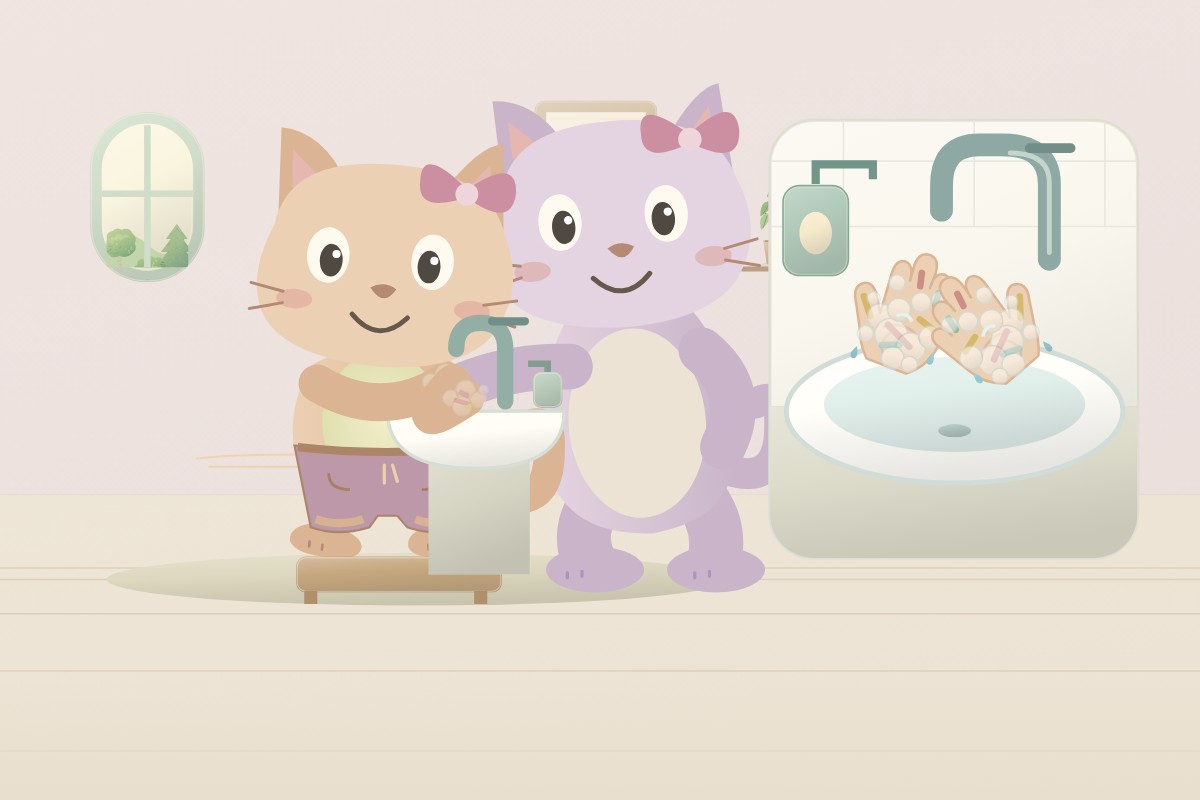
In the handwashing story, Mom helps her child through the steps after drawing. Water, lather and a towel all have a part to play. The hand hygiene recommendations and a review of the research are at the end.
Find an order your child can see
Wet hands under clean running water, then add soap. Get the lather onto the palms, backs, between the fingers and around the nails. “Where's your thumb hiding? Let's give it some bubbles.” Scrub for at least twenty seconds, then rinse under running water and dry with a clean towel. The next time you wash your own hands, show your child where you tend to miss a spot. Try washing side by side at a moment when nobody's in a hurry. Your child can copy what your hands are doing and tell you which bit is next. If they've chosen to watch for the thumbs, let them check yours as well. Children often enjoy the discovery that grown-ups miss a patch sometimes.
Twenty seconds can go quickly if you hum a short tune together that lasts about that long. If your neighbours are the only people enjoying the singing, name the places you're washing as you go. You can reach each part in turn and then go round again while the time's still running.
Put the soap where they can reach it
If your child can get to the sink on a stable step, put the soap and towel somewhere easy to reach too. A two-year-old may need your help with the water, the pump and the spaces between their fingers. A preschooler can show you which part they find easiest to forget. A check together can be as simple as “Show me the back of your hand. Did it get some bubbles?” The routine has to work on days when you're away from your own sink. Before you sit down to eat somewhere new, help your child find the soap and work out how the tap turns on. At home you can make the same steps easy by checking that the pump has soap and the towel is dry.
Colourful hands are easy to spot. Handwashing also matters after using the toilet, before eating, after blowing your nose and when hands are visibly dirty. Tie the habit to those moments. The route to lunch can go by the sink every day. It soon becomes an ordinary part of getting to the table.
The game helps them learn and the soap does its job
In community and childcare studies, programmes that promoted handwashing reduced episodes of diarrhoea. At home, keeping soap within reach and using a familiar routine makes it easier to repeat the steps. If your child hurried and only got their hands wet today, help them finish. Tomorrow there's another chance before lunch. You may need to lend a hand for a while, especially on the days when everyone is hungry.
What to take with you
Sources, if you'd like to read more
These studies and professional resources informed this article.
- WHO és UNICEF – Guidelines on hand hygiene in community settings
- CDC – Hand Hygiene Frequently Asked Questions
- Cochrane – Hand-washing promotion for preventing diarrhoea
The linked sources are in English.
Know someone who could use this?
Pass it on to a fellow parent. A little support can make a difference.